US-India Trade Deal 2026: Why "99% Done" Still Isn't Signed

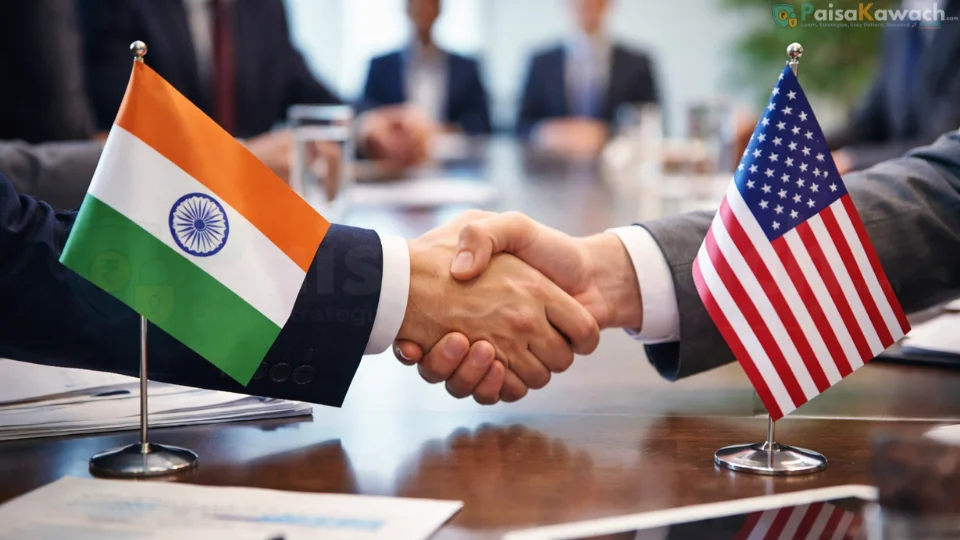
On October 20, 2026, US Secretary of State Marco Rubio stood beside India's External Affairs Minister in Mumbai and declared the long-awaited US-India trade deal was "99% done" — just "weeks, not months" away. President Trump echoed the sentiment from the Oval Office, telling reporters the two countries were "pretty close" to a pact that would be "different" from earlier agreements signed with other partners. Indian financial media ran the story as a breakthrough. Exporters breathed a sigh of relief. The rupee firmed slightly against the dollar in early trade.
Then the market opened the next morning, and reality reasserted itself. The Nifty fell 0.7%. Oil marketing stocks slid. The rupee gave back its gains. Because for all the optimistic language coming out of Washington and New Delhi, the actual mechanics of this deal remain unresolved — and the parts that are unresolved are precisely the parts that determine whether it is worth anything at all.
What looks like a final sprint is actually a carefully managed stalemate. The "99%" figure is technically accurate and strategically misleading. The remaining 1% is not technical cleanup. It is the entire substance of what both countries actually want from each other. And buried inside that 1% are three specific risks that Indian businesses, exporters, and investors need to understand before they plan their next fiscal year around a deal that may not hold.
The "99%" Illusion: What the Final 1% Actually Contains
Rubio's arithmetic deserves scrutiny. When a senior diplomat says a deal is "99% done," the natural assumption is that the remaining work is minor — formatting, translation, scheduling a signing ceremony. That assumption is wrong in this case. According to Rubio himself, the holdup is "language-related" — specific words and phrases that must mean exactly the same thing to both sides before signatures go on paper. That sounds bureaucratic. It is not.
Why the final 1% is the whole deal
The "language" being negotiated is the language of enforcement, escape clauses, and legal durability. India wants a deal it can rely on for years. The United States wants a deal it can adjust based on future foreign policy priorities — especially anything related to Russia. Those two objectives are not compatible, and no amount of diplomatic optimism resolves that tension.
Here is what the final 1% actually contains:
- Tariff permanence: India wants locked-in, predictable US tariff rates on its exports — steel, textiles, pharmaceuticals, auto components, and IT services. The US wants the flexibility to adjust duties based on future foreign policy priorities, especially anything related to Russia. If Washington retains that flexibility, India effectively signs a deal that can be unwound by a single executive order. That is not a trade agreement. It is a revocable license.
- Farm access: Washington wants deeper openings for American agricultural goods — dairy, grains, and processed foods. New Delhi has protected dairy and grain sectors for decades because they are politically untouchable with hundreds of millions of rural voters. No US-India trade deal in history has successfully opened India's dairy or grain markets. If this one tries, expect delays that push final signature into 2027.
- Enforcement language: If the US reserves the right to snap back penalties unilaterally, the deal's value collapses. Indian exporters need to know what tariff rate applies to their goods in January 2027, not what rate applies "subject to review." The difference between 18% and 100% is the difference between a viable export business and a shuttered one.
This is why the "99%" framing is misleading. The 99% that is "done" covers the easy parts — intellectual property language, digital trade principles, customs facilitation. The 1% that remains covers the parts that actually determine whether Indian businesses can plan, invest, and hire with confidence.
The Russia Oil Waiver: Relief That Can Disappear Overnight
The single most important development for India this month was not Rubio's visit. It was Trump's October 16 executive order waiving punitive tariffs under the Sanctioning Russia and Iran Act of 2026 — penalties that could have reached 100% on Indian goods. That waiver prevented an immediate crisis. It did not solve the underlying problem.
Why this matters more than any trade clause
India imports roughly one-third of its crude from Russia. The SRIA legislation, signed into law in September 2026, gave Washington the power to punish countries buying Russian energy. Trump waived it — but did not repeal it. The waiver has no expiry date, but it can be withdrawn at any time. Think tank GTRI put it bluntly: the relief is "reversible" and "offers no lasting certainty." For Indian businesses, this means the tariff environment for 2027 could change with a single White House statement. Any trade deal signed today operates under that cloud.
The numbers tell the story. India reduced Russian crude imports from 51% in July to 44% in August, buying more from the US and UAE — but at higher prices. That shift is costly for Indian refiners and, by extension, for consumers. And it has not bought India any permanent protection. The waiver remains a discretionary tool in Washington's hands, not a settled legal right for India.
There is a further asymmetry that Indian policymakers rarely acknowledge publicly. The US agreed not to raise tariffs on China until January 2027. India has no such fixed shield. China negotiated a dated protection. India received an undated waiver that can be revoked at will. That is not parity. It is exposure dressed up as relief.
- The waiver is leverage, not a concession: Washington retains the legal authority to reimpose penalties whenever it wants something from Delhi — on agriculture, on digital taxes, on defense procurement, on UN votes. Every future negotiation starts with that sword hanging over India's export sector.
- Russia's oil share is falling anyway: India's shift away from Russian crude is happening under pressure, not by choice. Higher input costs for refiners translate into higher prices at the pump and weaker margins for oil marketing companies. BPCL, HPCL, and IOCL all traded lower this week.
- China got protection too: The US agreed not to raise tariffs on China until January 2027. India has no such fixed shield. The comparison matters because it shows what a durable commitment looks like — and what India did not get.
What Indian Businesses Should Actually Watch
Forget the "99%" headline. The real signals for exporters, importers, and investors are buried in three specific technical details that will determine whether this deal is worth anything. None of them will appear in a press conference. All of them will appear in the legal text — and the legal text is where the deal will be won or lost.
The only three things that matter now
First, whether the final text includes a "snap-back" clause allowing the US to reimpose Russia-linked tariffs unilaterally. If it does, the deal is cosmetic. Indian exporters would be operating under a regime where their tariff rate depends on geopolitical events they cannot influence and Washington's mood on any given day. Second, whether India's protected agricultural sectors — dairy, cereals, and sensitive produce — remain explicitly excluded from tariff reductions. If the US pushes those open, domestic political resistance could delay or kill ratification, and the deal could collapse after months of negotiation. Third, whether the US commits to a fixed tariff schedule for Indian goods, or leaves rates subject to annual review. A fixed schedule gives businesses something to plan around. An annual review gives them nothing.
- Watch the legal text, not the press conference: Rubio said "99% of the work is done." The remaining 1% is the part that determines whether Indian exports face 18% or 100% tariffs in 2027. Read the fine print when it is published. The headline will not tell you what you need to know.
- The waiver is the real deadline: If the SRIA waiver is withdrawn before the trade deal is signed, India loses its primary negotiating leverage and faces immediate tariff exposure. The deal's timeline is therefore driven not by diplomatic convenience but by the durability of a waiver that could vanish without notice.
- Agriculture is the third rail: No US-India trade deal in history has successfully opened India's dairy or grain markets. If this one tries, expect farmer protests, parliamentary resistance, and delays that push final signature into 2027. The political cost of opening agriculture is higher than the economic benefit of the deal for New Delhi.
There is also a broader strategic question that Indian businesses should keep in mind. The US under Trump has demonstrated a willingness to use tariffs as a foreign policy instrument against friends and adversaries alike. India is not exempt from that logic. A trade deal signed today does not end the risk of future tariff threats. It only sets the baseline from which future threats begin.
The Bottom Line for Indian Markets and Exporters
The US-India trade deal may well be signed in the coming weeks. Rubio's "weeks, not months" timeline could prove accurate. But a signature is not the same as certainty. For Indian businesses planning exports, sourcing, or pricing for the next fiscal year, the only question that matters is not how close the deal is — it is how easily it can be broken.
Right now, the answer is: quite easily. The Russia oil waiver can be withdrawn. The agricultural exclusions are not yet locked in. The tariff schedule is not yet fixed. And the enforcement language that would give the deal durability is precisely what is being negotiated in that final 1%.
Indian exporters should plan for two scenarios: one where the deal is signed with durable tariff protections, and one where it is signed but remains revocable. The difference between those scenarios is not 1%. It is the difference between a stable export business and one that lives quarter to quarter, waiting for the next statement from Washington. Until the legal text is published and the waiver is made permanent, Indian businesses should assume the second scenario and plan accordingly.
The deal is close. That much is true. But close is not the same as done, and done is not the same as durable. For the Indian economy, the difference matters more than any headline.
Keep Reading: More Insights You Might Like
 Oil Price Today, Jio IPO Subscription and Tesla-Meta Earnings: Top Business News on 22 October 2026
Next →
 Sensex Slips to 73,123 as BPCL Profit Falls 21%, Q2 Earnings Take Centre Stage
Comments
No comments yet. Be the first to comment!