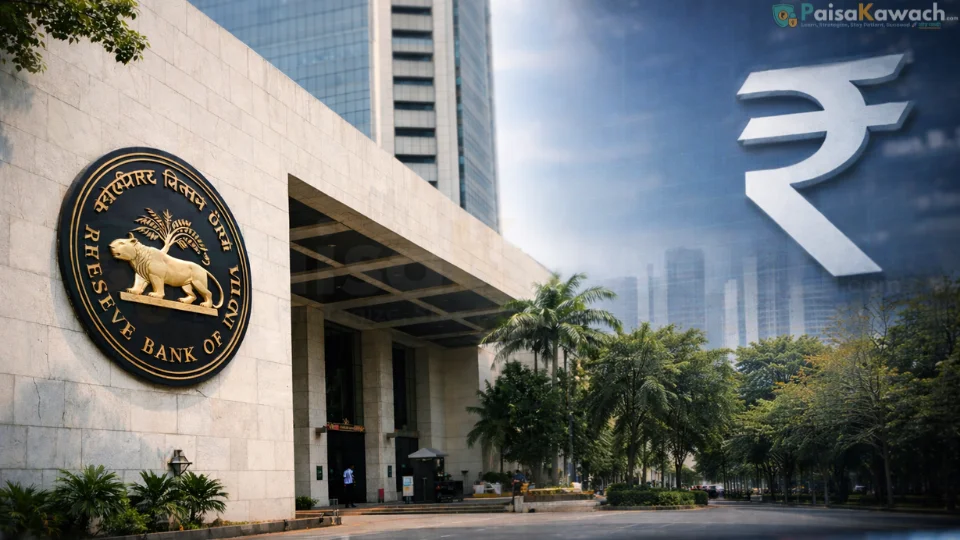
The Week Indian Markets Broke: A Five-Day Sensex Slide, $100 Oil, and the Peace Talk That Might Change Everything

Every losing streak has a story underneath the number, and this week's five-session Sensex slide is really three separate stories wearing one ticker symbol. There's the oil story, where crude crossing $100 stopped being a headline and started being an input cost. There's the earnings story, where Infosys and IndiGo delivered results that gave the market fresh reasons to sell rather than reasons to hold. And there's the currency story, where the rupee sliding toward record lows quietly made everything India imports more expensive at the exact moment energy costs were already climbing. None of these three stories are new individually. What made this particular week different is that all three landed in the same five trading days, compounding into the kind of decline that shows up not as one bad session, but as a pattern serious enough to touch a seven-week low.
Day by Day: How the Week Actually Unfolded
Numbers on a chart flatten a week into a single downward line, but the week didn't fall in a straight line — it fell in stages, each one triggered by something slightly different. Below is a session-by-session walk through what actually moved the market each day, because the sequence matters as much as the total decline.
Jul 20
Sensex 77,470 ▼ 0.31%
A second straight session of losses as Brent inched higher on renewed Trump rhetoric toward Iran. HDFC Bank and Axis Bank extended their earnings-driven slide as rising rates squeezed Net Interest Margins.
Jul 21
Sensex 76,755 ▼ 0.92%
Nifty turned technically weak, slipping below its rising trendline and forming a bearish candlestick after three straight down sessions. Persistent FII selling and West Asia tension kept sentiment fragile.
Jul 22
Sensex 76,391 ▼ 0.47%
Nifty slipped below the psychologically important 24,000 mark for the first time in weeks, closing at 23,869 as Brent held near a six-week high above $98 and the rupee weakened past ₹96.6/USD.
Jul 23
Sensex 76,245 ▼ 0.19%
A quieter decline on the surface, but the real damage was building underneath as Brent crude prepared to break $100 overnight following Houthi attacks on Saudi tankers in the Red Sea, widening the conflict's footprint.
Jul 24
Sensex ~75,688 ▼ 0.9%
The steepest single-day drop of the week. Sensex touched its lowest level since June 12, extending the losing streak to five sessions. Infosys and IndiGo both fell on weak earnings, while the rupee hovered near record lows against the dollar, amplifying import-cost fears just as oil peaked.
What Actually Drove Five Straight Red Sessions
Reading the week day by day makes one thing obvious: this wasn't a single shock that the market failed to absorb. It was three separate pressures arriving in overlapping waves, each one reinforcing the last before the previous one had fully played out. Crude oil didn't spike once and stabilize — it climbed steadily across the week before breaking $100, meaning the market never got a chance to price in a stable new baseline before the ceiling moved again. Bank earnings disappointed early in the week, and by the time technology and aviation names reported later in the week, there was no cushion of positive sentiment left to absorb further bad news.
The Rupee's Quiet Role in Amplifying Everything Else
It's easy to focus entirely on the Sensex number and miss what was happening to the rupee in parallel, but the currency move deserves equal attention. A weakening rupee against the dollar, arriving at the same time as $100 oil, doesn't just add two separate cost pressures together — it compounds them, because India pays for its oil imports in dollars. A weaker rupee means every barrel of that already-expensive oil costs even more in rupee terms than the headline dollar price alone would suggest. This is the mechanism by which currency weakness and energy price spikes reinforce each other rather than simply coexisting, and it's a large part of why this week's decline felt sharper than the headline oil price alone would explain.
- Crude oil's steady climb through the week, rather than a single spike, meant markets never found a stable price to adjust around before the next leg higher arrived
- Bank earnings disappointments early in the week removed a potential cushion that might otherwise have absorbed the later shock from weak IT and aviation results
- Rupee weakness against the dollar compounds directly with rising oil prices, since India's crude imports are dollar-denominated, making the effective cost increase larger than the dollar price move alone suggests
Today: A Fragile Signal of De-Escalation
Against that five-day backdrop, Friday's session carried one detail worth watching closely heading into today. Reuters reported, citing Pakistani sources, that Pakistan is considering a path toward facilitating new peace negotiations between the US and Iran, with the push reportedly being initiated by China. US markets responded to this specific headline by moving higher and seeing oil pull back during the session, even though the report itself acknowledged that meaningful obstacles to actual talks remain.
This matters less because of what it guarantees — a single sourced report about potential negotiations is a long way from an actual resolution — and more because of what it reveals about how starved the market currently is for any de-escalation signal at all. After a week defined entirely by compounding bad news, even an unconfirmed, obstacle-laden report of possible diplomacy was enough to move oil and equities in the same session. That reaction itself is informative: it suggests markets aren't pricing in permanent conflict so much as they're pricing in the absence of any visible path toward resolution, and the moment even a fragile path appears, sentiment can shift quickly.
Why a Single Sourced Report Moved Markets This Much
When markets are in an environment where nearly every recent data point has pointed one direction, the marginal value of a single contrary signal rises sharply, precisely because it's scarce. A report suggesting third-party diplomatic facilitation — even one explicitly noting obstacles remain — offers the market something it hasn't had in weeks: a plausible narrative for how this specific conflict phase eventually ends. Whether that narrative holds up under further reporting is a separate question from whether it was enough to move Friday's session, and for today's Indian market open, the more relevant question is whether that same fragile optimism carries through, or whether the underlying pressures — oil, rupee, earnings — reassert themselves once the initial reaction fades.
- A single sourced, obstacle-acknowledging report was enough to move both oil and US equities, showing how starved markets currently are for any de-escalation signal
- This reveals markets are pricing in the absence of a resolution path more than they're pricing in the conflict's severity itself, meaning sentiment can shift quickly if that path becomes credible
- Today's Indian market open will likely test whether Friday's fragile optimism has staying power, or whether the week's underlying pressures on oil, the rupee, and earnings reassert themselves
The Honest Read Heading Into Today
Five consecutive down sessions rarely resolve cleanly the moment a single positive headline appears, and this week's decline was built from pressures — energy costs, currency weakness, disappointing earnings — that don't disappear because of one sourced report about potential diplomacy. But markets don't need every problem solved to stabilize; they often just need a plausible reason to stop pricing in the worst-case trajectory. Whether Friday's peace-talks report becomes that reason, or fades as quickly as it appeared, is the question this week's losses have left for today's session to answer.
Keep Reading: More Insights You Might Like
 Triple Digit Oil, Eleven Nights of Strikes, and a Tariff Wall on 99% of Imports: The Day Three Pressures Became One
Next →
Triple Digit Oil, Eleven Nights of Strikes, and a Tariff Wall on 99% of Imports: The Day Three Pressures Became One
Next →
 A Week Away From Answers: Big Tech's Earnings Test, VW's 100,000 Job Cuts, and What Singapore's Sovereign Fund Is Quietly Telling the World
Comments
No comments yet. Be the first to comment!