The Records That Won't Hold: SpaceX's Lockup Shock, a New Red Sea Strike, and What It Means That Wall Street Can't Finish What It Starts

There's a particular kind of market weakness that doesn't show up as a crash, doesn't show up as a single bad headline, and is genuinely easy to miss if you're only reading closing numbers. It shows up instead as a pattern of things almost holding — a rally that reaches a record and then quietly gives it back, a de-escalation story that resolves one front while a second one reopens somewhere else, a strong earnings report that gets overwhelmed by a purely mechanical event nobody was pricing for. This week produced three separate examples of exactly that pattern, arriving close enough together that they're worth reading as one story rather than three unrelated headlines.
SpaceX's $101 Billion Lesson in the Difference Between Fundamentals and Structure
Just twenty-four hours after SpaceX reported genuinely impressive debut earnings as a newly public company — 92% revenue growth, a narrowed net loss, and a $47.5 billion order backlog that should have given investors plenty of reason for confidence — the stock fell 14% overnight. The cause wasn't a change in the company's prospects. It was a scheduled, entirely predictable structural event: roughly $101 billion worth of shares became eligible for trading for the first time since the company's June IPO, and the resulting supply hit the market hard enough to overwhelm whatever goodwill the earnings report had generated.
This distinction matters more than it might initially appear. A stock falling because a company's fundamentals disappointed tells investors something about the business. A stock falling because a mechanical lockup expiry flooded the market with new sellable shares tells investors something about supply and demand mechanics that has nothing to do with the business at all. Retail investors seem to understand this distinction already — data from VandaTrack shows mom-and-pop traders have bought SpaceX shares on net every single trading day since the IPO, continuing to buy even as the stock now trades more than 17% below its opening price. That's not the behavior of investors who've lost confidence in the company; it's the behavior of investors who recognize a structural event when they see one and are treating the pullback as a buying opportunity rather than a verdict.
Why Lockup Expirations Deserve More Attention Than They Usually Get
Every major IPO carries a scheduled lockup expiration, typically arriving months after the initial listing, and the pattern SpaceX just demonstrated tends to repeat with remarkable consistency: a wave of new sellable shares, often held by early investors and employees looking to realize gains, hits the market regardless of how the underlying business is actually performing at that exact moment. For a market currently digesting an unusually large wave of major tech and space-adjacent IPOs, this is a mechanism worth understanding clearly, because the next several months will likely bring similar lockup expirations across other recently listed companies, each one carrying the same risk of overwhelming otherwise-strong fundamentals with pure share-supply pressure.
- SpaceX's 14% drop was driven by a scheduled, predictable structural event — a lockup expiry — rather than any change in the company's actual business performance
- Retail investors continuing to buy on net throughout the decline suggests the market's most engaged participants are correctly distinguishing this from a fundamentals-driven selloff
- This same lockup dynamic is likely to repeat across other major companies that have gone public this year, making it a mechanism worth tracking well beyond SpaceX specifically
The Red Sea Reopens a Front Markets Thought Was Closing
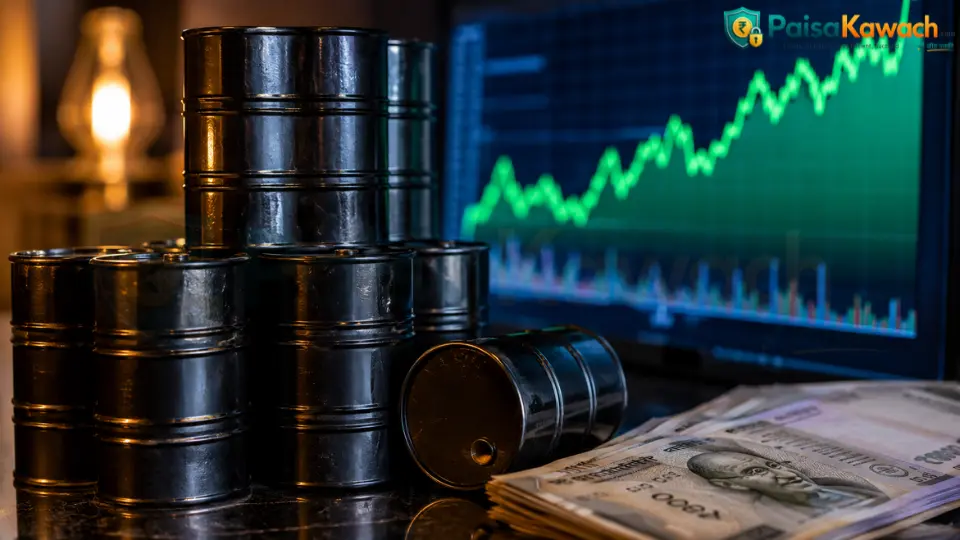
While SpaceX investors absorbed a structural shock, energy markets absorbed a genuinely different kind of surprise. Yemen's Iran-backed Houthi militants claimed responsibility for striking a Saudi Arabian tanker in the Red Sea, sending Brent crude up 1% to $80.22 a barrel and WTI to $76.12 — a reversal that arrived at the worst possible moment for anyone who had started pricing in genuine, broad-based Middle East de-escalation following the recent Strait of Hormuz diplomacy.
This incident is a useful, if uncomfortable, corrective to a narrative that had been building over the preceding week: that this conflict was moving toward resolution as a single, unified story. It isn't. The Strait of Hormuz and the Red Sea are two geographically distinct shipping corridors, controlled by different actors with different incentives, and progress on one doesn't automatically translate into safety on the other. A market that had been treating "Iran talks progressing" as shorthand for "Middle East risk resolving" just received a direct reminder that the region contains multiple, only loosely connected flashpoints, each capable of independently moving oil prices regardless of what's happening on any other front.
Why Treating This as One Conflict Rather Than Several Leads to Mispricing
Markets often simplify complex, multi-actor conflicts into a single narrative thread for the sake of tradability — "the Iran situation" becomes shorthand for an entire region's worth of separate, only partially related tensions. That simplification works reasonably well when a conflict genuinely has one dominant driver, but it breaks down precisely at moments like this one, when a completely separate actor, with its own separate grievances and its own separate geography, produces an incident that has nothing directly to do with whatever progress is being made in Hormuz negotiations. Markets that had been pricing broad regional de-escalation based on Hormuz-specific headlines got a sharp reminder that the region's risk map is considerably more fragmented than that.
- The Houthi attack demonstrates that Strait of Hormuz diplomacy and Red Sea shipping security are separate risk fronts that don't automatically move together
- Markets that had simplified the broader Middle East conflict into a single tradable narrative are being forced to reprice around a more fragmented, multi-actor reality
- Oil price stability going forward likely requires monitoring multiple, semi-independent flashpoints simultaneously rather than tracking any single negotiation as a complete proxy for regional risk
Wall Street Keeps Reaching Records It Can't Hold
The third thread ties the first two together at the index level. Wednesday morning, both the S&P 500 and the Dow touched fresh intraday record highs, lifted by genuinely strong individual results — Charles River Laboratories jumped over 11% on an earnings beat, and Disney rose nearly 2% despite a mixed quarter. By the close, though, both the S&P 500 and the Nasdaq 100 had given back those gains entirely, marking the second time in barely a week that this exact pattern has played out: a strong opening push to fresh highs, followed by a session that can't sustain the move through the closing bell.
A single instance of this pattern could reasonably be dismissed as ordinary volatility. A second instance within the same week is harder to wave away, because it suggests something more specific than random noise — a market that has genuine reasons to push higher on good individual news, but lacks the sustained underlying conviction to hold those gains once the initial reaction fades and investors have time to weigh the SpaceX-style structural risks and Red Sea-style geopolitical surprises sitting underneath the headline numbers.
Why Failing to Hold a Record Matters More Than Never Reaching One
There's a meaningful difference between a market that simply can't reach new highs and one that reaches them repeatedly but can't sustain the level. The first pattern suggests straightforward weak sentiment. The second, which is what's actually happening right now, suggests a market genuinely torn between real reasons for optimism — strong individual earnings, progress on de-escalation — and real reasons for caution that keep reasserting themselves within the same trading session. That tug-of-war, playing out inside single sessions rather than across weeks, tends to produce exactly the kind of choppy, hard-to-trade environment markets are currently displaying, where good news moves prices in the morning and unresolved risk erases those moves by the close.
- Reaching a record twice in a week without holding it through the close signals a genuine internal conflict between optimism and caution, not simply an absence of good news
- This pattern tends to produce choppier, harder-to-read trading conditions than either a sustained rally or a sustained decline would
- The SpaceX lockup and the Red Sea attack, both landing in the same window, offer concrete examples of exactly the kind of underlying risk that keeps preventing these record attempts from sticking
Three Failures to Hold, One Honest Read on Market Conviction
SpaceX's earnings couldn't hold against a scheduled lockup expiry. Oil's de-escalation narrative couldn't hold against a separate Red Sea flashpoint. And Wall Street's record highs couldn't hold through a single trading session, twice in one week. None of these three failures share a direct cause, but each one reveals the same underlying condition: markets currently have plenty of reasons to want to move higher, and just as many reasons, often arriving from completely unrelated directions, that keep preventing those moves from actually sticking. That combination — genuine optimism paired with genuine, recurring interruption — is a more honest description of where global markets actually stand right now than either a rally or a selloff narrative would offer on its own.
Keep Reading: More Insights You Might Like
 The Selectivity Trade: Why SpaceX and AMD Got Punished, Palantir Got Rewarded, and Records Happened Anyway
Next →
The Selectivity Trade: Why SpaceX and AMD Got Punished, Palantir Got Rewarded, and Records Happened Anyway
Next →
 The Bill That Broke the Story: How Iran's Own Legislation Undercut Its Peace Deal, While Oil Majors Cash In and Wall Street Quietly Loses Its Nerve
Comments
No comments yet. Be the first to comment!