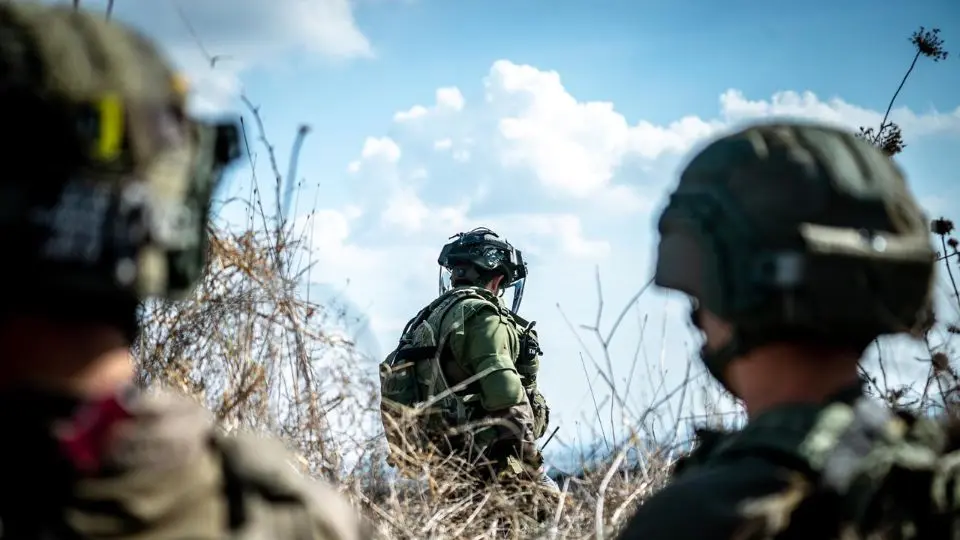
Peace Broke Out and Markets Fell Anyway: Inside the Week Geopolitics Stopped Being the Main Story

For months, the pattern has been reliable enough to set a watch by: bad news from the Middle East sends oil up and stocks down, good news sends oil down and stocks up. This week broke that pattern, and the way it broke is more revealing than either half of the story on its own. The US and Iran genuinely paused their conflict. Oil genuinely fell more than 5%. And stocks, which should have been the easy, obvious beneficiary of both, fell anyway — hard, in places, and specifically in the sector that has driven most of this year's gains. Something else has taken over as the dominant force in markets, and this week made it undeniable.
When Genuinely Good News Stops Being Enough
Start with what actually went right. President Trump decided against a major escalation with Iran, and both sides agreed to pause military attacks — a real, substantive reversal from just days earlier, when the administration had explicitly declared the prior ceasefire "over" after eleven consecutive nights of strikes. This isn't a minor diplomatic gesture. It's the most significant de-escalation signal markets have received in weeks, and it did exactly what de-escalation is supposed to do to energy markets: oil prices dove more than 5% in a single session, and Treasury yields fell as inflation and rate-hike fears eased in response.
By the old playbook, this should have been the story of the week — a relief rally, stocks climbing broadly on reduced geopolitical risk and cheaper energy costs. And for a few hours, it largely was. Stocks jumped higher early Monday exactly as expected. But that rally didn't hold the market's attention for long, because a second, unrelated story was building underneath it, and by Tuesday, that second story had completely overtaken the first.
The Old Rule Still Half-Worked — Just Not for Long Enough to Matter
What actually happened is instructive rather than confusing once you separate the two stories properly. The Iran de-escalation did exactly what it should have done to the specific assets most directly tied to that risk — oil, yields, and the broader risk-off positioning that had built up over weeks of conflict. What it couldn't do was fix a completely separate problem that had nothing to do with the Middle East at all: growing doubt about whether the enormous capital being poured into AI infrastructure is actually generating the returns markets have been pricing in. Geopolitical risk and valuation risk are different animals, and this week proved that solving one doesn't touch the other.
- Oil's 5%+ drop and falling Treasury yields confirm the Iran de-escalation genuinely worked as a risk-reducing event for the assets most directly exposed to that conflict
- Stocks' failure to sustain a rally despite this good news signals a second, independent source of market pressure had already become dominant
- Markets are increasingly separating geopolitical risk from AI-valuation risk as two distinct forces, rather than treating all uncertainty as one undifferentiated risk-off signal
The AI Selloff That Overpowered a Genuine Peace Signal
The second story is where this week's real damage happened. Even as Middle East tensions eased, doubts over returns from the hundreds of billions of dollars poured into artificial intelligence infrastructure spending rippled through semiconductor stocks from Wall Street to Asia, and the scale of the reaction was severe. South Korea's SK Hynix slumped as much as 13% in a single session. Samsung Electronics fell up to 10%. Together they dragged South Korea's Kospi — the index most closely watched as a bellwether for global AI investment sentiment — down a full 9%. Japan's Nikkei and Taiwan's benchmark both fell almost 4%, and the broader MSCI Asia Pacific equity gauge slipped 3%, with SK Hynix and Samsung standing as the single biggest drags on that entire regional index.
The significance here isn't just the size of the numbers, severe as they are. It's the timing. This selloff happened in the same 24-to-48-hour window as the most positive geopolitical news markets had received in weeks. A market that was still primarily trading on geopolitical risk would have used the Iran pause as a reason to buy chip stocks alongside everything else, on the theory that reduced global tension supports risk assets broadly. Instead, chip stocks fell anyway, and fell hard — direct evidence that the AI-valuation question has become large enough to move markets independently, regardless of what else is improving elsewhere.
What It Means When One Story Can Override Another This Cleanly
Markets rarely offer this clean a natural experiment. Having a genuinely positive, verified geopolitical development land in the same window as a severe sector-specific selloff, and watching the selloff win, tells you something concrete about where investor attention and anxiety currently sit. It suggests the AI capital expenditure question isn't a secondary concern riding alongside geopolitical risk — it has become the market's primary lens, with everything else, including major de-escalation news, now treated as a secondary input rather than the main event. That's a meaningfully different market regime than the one that had prevailed for most of the year, and this week is likely to be remembered as the moment that shift became visible rather than theoretical.
- Chip stocks falling sharply despite positive geopolitical news is direct evidence that AI-valuation concerns are now overriding other market drivers, not merely competing with them
- South Korea's Kospi falling 9% in a single session, driven specifically by its two largest semiconductor names, shows the reaction is concentrated exactly where AI infrastructure spending exposure is highest
- This pattern suggests markets have entered a regime where AI capex sentiment, rather than geopolitical risk, is now the dominant variable shaping day-to-day trading
A Hawkish New Fed Chair Walks Into This Exact Moment
Layered on top of both stories is a third, quieter but equally consequential development: the Federal Reserve's July policy meeting begins today, running through Wednesday, marking the fifth FOMC gathering of 2026 — and the first genuinely high-stakes one under new Fed Chair Kevin Warsh, who is widely regarded as a policy hawk generally inclined to favor higher rates over the risk of letting inflation run hot.
The timing could hardly be more complicated for a new chair finding his footing. Crude oil, despite today's sharp pullback on the Iran pause, is still up roughly 20% for the month of July alone — a gain large enough to keep near-term headline inflation readings elevated regardless of where oil trades on any single day. A hawkish incoming chair facing a month of genuinely elevated energy-driven inflation pressure, in his very first meaningful policy test, is not a comfortable combination for markets already nervous about how monetary policy will be communicated and executed under new leadership.
Why This Fed Meeting Carries Unusual Weight
Central bank credibility is built gradually, through a consistent track record of decisions and communication that markets learn to predict. A new chair doesn't have that track record yet, which means every early decision gets scrutinized more intensely than it would for an established leader, simply because markets are still learning how to interpret this particular voice. Facing that scrutiny during a month when oil is up 20% and semiconductor markets are already in turmoil raises the stakes considerably — any perceived misstep in tone or substance risks compounding, rather than calming, the uncertainty already present from the other two stories this week.
- A month-long 20% rise in crude oil keeps inflationary pressure elevated even as day-to-day oil prices ease, complicating the backdrop for this week's Fed decision
- A new, hawkish Fed chair's first major policy test carries outsized market scrutiny simply because markets haven't yet built a track record to interpret his communication style
- This meeting's outcome arrives directly on top of an already-fragile market grappling with the AI selloff, meaning any hawkish surprise could compound rather than offset existing pressure
Three Stories, One New Market Reality
Put together, this week offers a genuinely useful lesson in how market priorities shift. A real, substantive de-escalation between the US and Iran did exactly what it should have done to oil and yields — and still wasn't enough to prevent one of the sharpest chip-sector selloffs of the year, because a separate, larger anxiety about AI spending returns had already taken over as the market's central concern. Layer a new, hawkish Fed chair's first real test directly on top of both stories, arriving during a month of still-elevated oil-driven inflation, and you get a market forced to reconcile good geopolitical news, a serious valuation reckoning, and a monetary policy transition all within the same 48 hours. That combination, more than any single headline in it, is the real story of this week.
Keep Reading: More Insights You Might Like
 A Week Away From Answers: Big Tech's Earnings Test, VW's 100,000 Job Cuts, and What Singapore's Sovereign Fund Is Quietly Telling the World
Next →
A Week Away From Answers: Big Tech's Earnings Test, VW's 100,000 Job Cuts, and What Singapore's Sovereign Fund Is Quietly Telling the World
Next →
 The Worst Possible Wednesday: Chips Crash on Wall Street, Iran Strikes Back, and a New Fed Chair Speaks for the First Time
Comments
No comments yet. Be the first to comment!