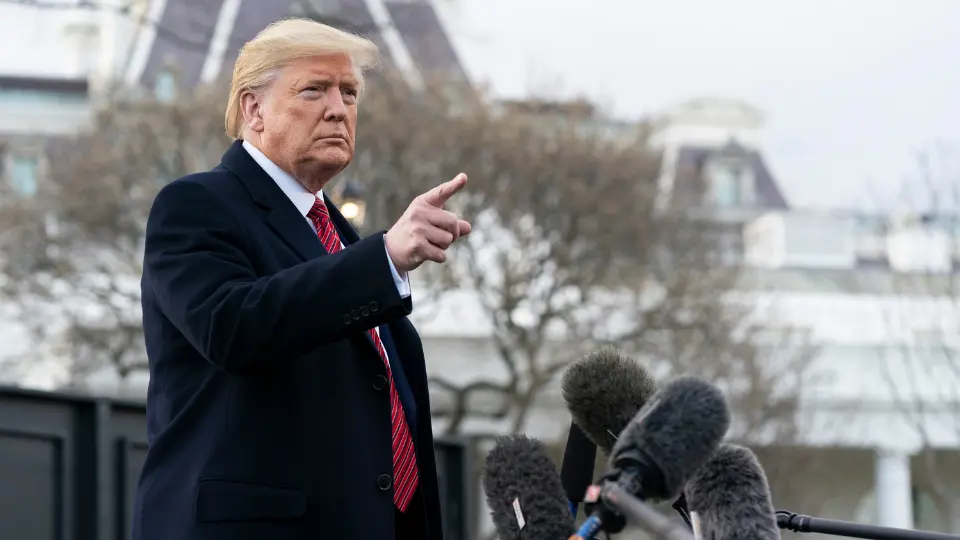
The Worst Possible Wednesday: Chips Crash on Wall Street, Iran Strikes Back, and a New Fed Chair Speaks for the First Time

Some trading days arrive with one dominant story and a supporting cast of smaller ones. This Wednesday arrived with three genuinely major stories, none of them supporting the others, all of them landing on the same calendar square. A semiconductor selloff that had been contained to Asian exchanges finally crossed the Pacific and hit American chip stocks directly. A ceasefire that markets had treated, cautiously, as real news collapsed within 48 hours when Iran attempted a surprise strike on US troops. And in the middle of both, a brand-new Federal Reserve chair delivered his first major policy communication, with no ability to wait for calmer conditions before doing so. Each of these stories would have dominated an ordinary week on its own. Together, on one Wednesday, they describe a global financial system being asked to absorb technology-sector doubt, renewed military escalation, and a monetary policy transition, all without a moment's pause between them.
When a Regional Selloff Stops Being Regional
For several sessions, the AI-valuation reckoning had a specific geography. It hit South Korea hardest, then spread to Taiwan and Japan, with American markets watching from a relatively comfortable distance — chip stocks softening, but nothing close to the double-digit collapses seen in Seoul. That distance closed abruptly. South Korea's SK Hynix plunged 14.65% at the close, and Samsung Electronics fell more than 13%, continuing a pattern of severe single-session losses that had already become the defining story of the week in Asia. This time, though, the damage didn't stay contained. Micron fell over 4% in premarket US trading, Nvidia dropped around 1.2%, and both Intel and AMD were down more than 3% — a clear, direct transmission of the same anxiety that had been battering Asian memory-chip makers for days.
The significance of this crossing isn't just the dollar value wiped off American chip stocks. It's what the crossing itself reveals about how markets are now interpreting the AI spending question. As long as the selloff stayed concentrated in Asian memory-chip exporters, it was possible to read it as a narrower story — perhaps specific to leveraged positioning in Korean markets, or to concerns unique to hardware supply chains rather than the broader AI investment thesis. Once American chipmakers, including companies with far more diversified AI exposure than pure memory producers, started falling in sympathy, that narrower reading became much harder to sustain. This looks, increasingly, like a single global reassessment rather than several separate regional stories that happen to share a sector label.
Why Cross-Border Contagion in Chip Stocks Matters More Than the Percentage Declines
Individual stock declines, even severe ones, can often be explained by company-specific factors — a disappointing earnings report, a guidance cut, a single analyst downgrade. What's harder to explain away is the same anxiety moving cleanly across borders, across different companies with different business models, within the same 24-hour news cycle. That pattern suggests investors aren't reacting to isolated company news; they're repricing an entire category of assets based on a shared, sector-wide belief that AI infrastructure spending may not be generating the returns its scale would require. Once that belief takes hold broadly enough to move markets on three continents in step, it tends to be considerably harder to reverse than a single company's stock-specific selloff.
- Semiconductor declines crossing from Asian to American markets within the same session indicate a shared, global reassessment of AI-related valuations rather than several unrelated regional stories
- American chipmakers with more diversified business models falling in sympathy with pure memory-chip exporters suggests the market's concern has broadened beyond any single company's specific circumstances
- Cross-border, same-day contagion of this kind is historically harder to reverse than isolated stock-specific declines, since it reflects a shift in shared belief rather than a single correctable data point
Forty-Eight Hours: How Fast a Ceasefire Actually Unraveled
Just two days earlier, markets had received what looked like genuine, substantive news: the US and Iran had paused military attacks, oil had fallen more than 5% in response, and Treasury yields had eased as inflation concerns receded. It was treated, cautiously but genuinely, as the most credible de-escalation signal in weeks. That signal didn't survive the week. The US military confirmed it intercepted an Iranian "attempted surprise attack" on troops based in the Middle East, and crude oil responded exactly the way markets have been conditioned to expect by now — jumping roughly 5% to top $83 a barrel, snapping what had briefly been a genuine three-day decline, the steepest such decline for Brent crude since April 2020.
The speed of this reversal is the part worth sitting with more than the reversal itself. A ceasefire collapsing after months would be one thing — evidence of a slow, gradual breakdown in whatever framework had briefly held. A ceasefire collapsing within 48 hours is a different signal entirely. It suggests the underlying conditions that produced the pause were never as stable as the pause itself implied, and that whatever calculus led to Monday's de-escalation didn't actually resolve the deeper tensions driving the conflict — it merely paused them temporarily, with the underlying pressure resuming almost as soon as the pause was tested.
What a 48-Hour Collapse Teaches Markets About Pricing This Conflict
Every time this specific pattern repeats — genuine de-escalation followed by rapid re-escalation — it teaches market participants something uncomfortable about how to price the underlying risk. A pause that holds for months can reasonably be treated as a meaningful reduction in baseline risk. A pause that collapses within two days starts to look less like progress and more like noise around an unchanged, elevated baseline. That distinction matters enormously for how oil traders, currency markets, and equity investors set their risk premiums going forward — a conflict that oscillates this rapidly between calm and escalation may end up commanding a more persistently elevated risk premium than either a fully resolved situation or a steadily worsening one, precisely because the uncertainty itself becomes the dominant, unresolvable variable.
- A ceasefire collapsing within 48 hours, rather than gradually eroding over months, suggests the underlying conflict conditions were never genuinely resolved by the pause itself
- This rapid-oscillation pattern between de-escalation and re-escalation is historically associated with markets pricing in a persistently elevated, rather than temporarily resolved, risk premium
- Oil's sharp reaction, snapping its steepest three-day decline since April 2020, shows energy markets treating this reversal as a meaningful data point rather than routine volatility
A New Fed Chair's First Major Test Arrives at the Worst Possible Moment
Into this exact environment — a spreading chip-sector selloff and a just-reignited Middle East conflict — steps newly confirmed Federal Reserve Chair Kevin Warsh, delivering his first major policy communication as the FOMC concludes its July meeting today. Warsh is widely regarded as a monetary policy hawk, generally inclined to favor higher interest rates over the risk of allowing inflation to run hot, a reputation built well before he took the chair and one markets will now watch him act on in practice for the first time.
The backdrop makes this an unusually difficult debut. Consumer confidence has fallen for a third consecutive month, dropping to 114.9 as gasoline prices climbed back toward $4.10 a gallon amid the renewed Middle East fighting — a reminder that the energy-driven inflation pressure Warsh inherits isn't theoretical, it's already visibly working through household sentiment. A hawkish new chair facing rising energy costs, a global equity selloff in the technology sector, and softening consumer confidence simultaneously has essentially no clean path forward: leaning hawkish risks compounding pressure on already-fragile markets, while leaning dovish risks appearing to abandon inflation discipline in his very first meaningful test.
Why First Communications From a New Fed Chair Carry Outsized Weight
Markets spend years learning to interpret a central bank chair's specific language, tone, and emphasis — what a phrase like "data dependent" or "elevated uncertainty" actually signals about near-term policy intent from that particular person. A first major communication offers none of that accumulated context. Every word gets parsed more literally and more anxiously than it would from an established chair, precisely because markets don't yet have a track record to calibrate against. Delivering that first communication during a week already defined by a spreading chip selloff and renewed military conflict raises the stakes considerably further — any perceived misstep in tone, even an unintentional one, risks being read as a signal about how this Fed will handle future crises, well beyond whatever the actual policy decision turns out to be.
- A new Fed chair's first major policy communication lacks the accumulated market context that helps investors interpret an established chair's specific language and emphasis
- Three consecutive months of declining consumer confidence, alongside rising gasoline prices, shows the inflation pressure Warsh inherits is already visible in household sentiment, not merely a market abstraction
- The timing of this debut, arriving during simultaneous chip-sector and geopolitical turmoil, raises the risk that any communication misstep gets read as a signal about future crisis handling rather than judged narrowly on today's decision alone
Three Tests, One Overloaded System
A semiconductor selloff crossing continents, a ceasefire collapsing in 48 hours, and a new Fed chair's debut arriving in the middle of both are three genuinely independent stories. But asking any financial system to absorb all three simultaneously reveals something about how thin the margin for calm has become. Markets don't get to process a valuation reckoning, a security crisis, and a monetary policy transition one at a time and in sequence, however much that would make each individual story easier to digest. They arrive together, and today's session will be shaped not by any single one of these developments in isolation, but by how much combined weight a global financial system already stretched thin can actually carry before something has to give.
Keep Reading: More Insights You Might Like
 Peace Broke Out and Markets Fell Anyway: Inside the Week Geopolitics Stopped Being the Main Story
Next →
Peace Broke Out and Markets Fell Anyway: Inside the Week Geopolitics Stopped Being the Main Story
Next →
 The Dissent, The Front Line, and the 250-Fold Answer: Three Signals From the Week the Old Rules Stopped Working
Comments
No comments yet. Be the first to comment!