Black Sea Crisis, AI Market Turmoil and US Nuclear Talks: 3 Global Developments Shaping October 16, 2026

Global markets and international security are facing a fresh test on Friday, October 16, 2026, as three major developments put the spotlight on the growing connections between geopolitical conflict, financial stability and nuclear diplomacy. Drone attacks on commercial vessels in the Black Sea are raising concerns about maritime security near NATO member states, fresh worries about artificial intelligence (AI) infrastructure financing are unsettling technology investors, and US President Donald Trump has said Washington is discussing denuclearization with Russia and China.
Although these developments are unfolding in different parts of the world, their potential consequences extend far beyond the countries directly involved. Disruptions to shipping could increase transport and commodity costs, financial instability in the AI sector could affect investors and businesses worldwide, and progress on nuclear arms control could influence the international security environment for years to come. For governments, companies and investors, October 16 is a reminder that geopolitical risks and economic uncertainty remain closely intertwined.
1. Black Sea Drone Attacks Raise Fears of Wider International Conflict
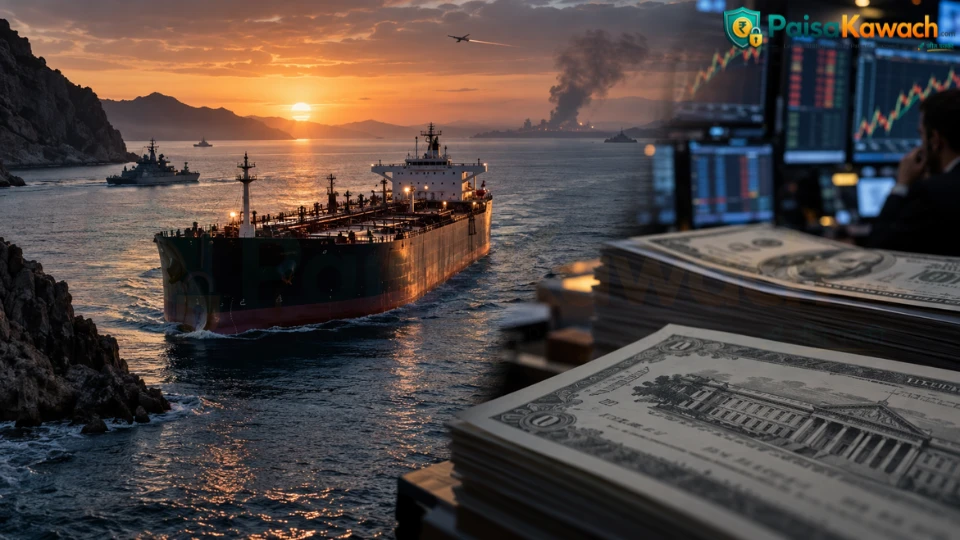
A series of drone attacks against commercial vessels in the Black Sea is intensifying concerns about the security of one of the world's strategically important maritime regions. The incidents have affected at least seven commercial vessels during October, with attacks reported near the exclusive economic zones of NATO members Romania and Bulgaria. The attacks have left two people dead and at least 25 crew members missing, according to reporting by the Associated Press on October 16.
The incidents are particularly concerning because the Black Sea remains a critical route for Ukrainian agricultural exports and other regional trade. Since Russia launched its full-scale invasion of Ukraine in 2022, repeated attacks on ports and maritime infrastructure have forced exporters and shipping operators to navigate an increasingly dangerous environment.
Romania and Bulgaria are NATO members, making attacks near their coastlines a sensitive security issue. Authorities are investigating the incidents, while regional governments and NATO allies are considering how to strengthen maritime surveillance, improve protection against drones and reduce the risks to commercial shipping. Responsibility for individual attacks must be assessed using verified evidence, even as officials examine possible links to the wider Russia-Ukraine conflict.
Why the Black Sea crisis matters to the global economy
The immediate concern is the safety of commercial crews and vessels. However, the economic consequences could spread across international supply chains if shipping companies become reluctant to operate in the region or insurers raise premiums to account for higher risks.
- Global food supplies: Continued disruption to Ukrainian agricultural export routes could complicate grain shipments to import-dependent countries in Africa, the Middle East and other regions.
- Shipping and insurance costs: Higher war-risk premiums, additional security measures and route changes could increase the cost of transporting goods.
- NATO-Russia tensions: Further incidents near allied territory could intensify diplomatic confrontation and increase pressure on NATO to strengthen regional defenses.
How a Black Sea shipping disruption could affect India and other importers
For India and other economies connected to international commodity markets, the consequences would depend on the scale and duration of any disruption. India is a major agricultural producer, but global grain prices, freight costs and insurance premiums can still affect food-import expenses and the economics of international trade.
Higher maritime security costs could also feed into broader transportation expenses if shipping companies pass additional charges on to customers. Countries that rely heavily on imported food, fertilizers or other commodities could face greater pressure if disruptions coincide with other supply constraints.
For now, the key question is whether the incidents remain localized or develop into a sustained threat to commercial shipping. An escalation could have consequences well beyond the Black Sea, while effective regional coordination and improved maritime protection could help limit the economic damage.
Key developments to watch in the Black Sea
- Whether investigations establish responsibility for the latest attacks and whether additional commercial vessels are targeted.
- Whether NATO members increase maritime surveillance, counter-drone deployments or other defensive measures.
- Whether shipping insurance premiums, freight rates and grain-export flows show signs of sustained disruption.
2. AI Debt Concerns Trigger Fresh Uncertainty Across Global Financial Markets
Global financial markets are also confronting questions about the cost and sustainability of the artificial intelligence investment boom. On October 15, technology stocks and bonds came under pressure as investors reassessed the debt financing supporting the rapid expansion of AI infrastructure. Nvidia-backed cloud computing company CoreWeave became a major focus of concern because of its substantial borrowing requirements and the capital-intensive nature of its business.
Reuters reported that CoreWeave's debt burden had become a focal point for investors concerned about the financing of data centers and the computing capacity required to develop and operate advanced AI systems. The company has faced scrutiny over whether future revenue and cash flow can adequately support its financing commitments.
The concerns spread beyond a single company. Investors began examining whether technology businesses are investing too aggressively in data centers, advanced chips and computing infrastructure before the financial returns from those investments become sufficiently predictable.
Asian stock markets attempted a recovery on Friday. Japan's Nikkei rose approximately 1.8%, South Korea's KOSPI gained around 2.8%, and Hong Kong's Hang Seng advanced about 1.1%, according to Reuters. However, the rebound followed substantial losses in the previous session and does not necessarily mean that concerns about AI financing have disappeared.
Why AI financing risks matter beyond technology stocks
Artificial intelligence has become a major source of corporate investment, competition and expected productivity growth. Building the infrastructure required for AI, however, demands substantial upfront spending on semiconductors, data centers, electricity, networking and specialized computing equipment.
When companies finance that expansion through borrowing, higher interest rates or weaker-than-expected revenue growth can make projects more expensive and reduce expected returns. If lenders become more cautious, businesses that depend on external financing may need to delay projects, reduce spending or seek additional capital on less favorable terms.
- Stock market volatility: Investors could reassess valuations across semiconductor companies, cloud computing providers and other businesses exposed to AI infrastructure spending.
- Corporate borrowing costs: Companies with substantial debt requirements may face higher financing expenses or more restrictive lending conditions.
- Global investment and employment: A slowdown in data-center construction and technology spending could affect equipment suppliers, contractors, energy providers and workers across several countries.
Could the AI market correction affect the wider world economy?
The central issue is whether current market pressure represents a temporary reassessment of valuations or a deeper challenge to the financial model supporting AI expansion. A correction in the shares of heavily indebted companies does not automatically mean that demand for artificial intelligence is collapsing. It may instead reflect investors becoming more selective about which businesses can generate sustainable profits from the technology.
Nevertheless, a prolonged decline could have wider consequences. Technology companies might reduce capital expenditure, investors could become less willing to finance speculative projects, and businesses in related industries could experience slower orders. The effects would be especially important for companies that have borrowed heavily on the assumption that future demand will justify today's spending.
There is also a potentially positive outcome. More disciplined financing could encourage companies to prioritize commercially viable applications, improve productivity and avoid excessive investment in infrastructure that may not be fully utilized.
For the global economy, the distinction between an AI valuation correction and a broader credit problem will be crucial. If financing remains available to profitable businesses, the technology sector could continue to expand despite short-term market turbulence. If borrowing difficulties spread across companies and lenders, the effects could become more widespread.
Key AI market indicators investors should monitor
- Quarterly earnings, operating cash flow and capital expenditure plans from major technology and cloud computing companies.
- Corporate bond yields, credit spreads and the availability of financing for heavily indebted AI infrastructure businesses.
- Evidence that AI adoption is translating into measurable productivity gains, recurring revenue and sustainable profits.
3. Trump Signals Nuclear Discussions With Russia and China Following New START Expiration
In a separate development with potentially far-reaching consequences, US President Donald Trump has said Washington is discussing denuclearization with Russia and China. His remarks, reported on October 15, have renewed attention on the future of nuclear arms control following the expiration of the New Strategic Arms Reduction Treaty, known as New START, earlier in 2026.
The treaty, signed by the United States and Russia in 2010, established limits on deployed strategic nuclear weapons and delivery systems. Its expiration has increased concerns about the future of legally binding limits and verification arrangements between the world's two largest nuclear powers.
According to Reuters reporting, Trump said the United States was talking with both Moscow and Beijing about denuclearization. He also expressed concern about China's expanding nuclear capabilities. His comments indicate an interest in discussions, but they should not be interpreted as confirmation that a new treaty has been negotiated or that the three countries have agreed to reduce their arsenals.
The diplomatic challenge is substantial. Washington and Moscow have long maintained the world's largest nuclear arsenals, while Beijing's nuclear capabilities and strategic ambitions have become an increasingly important factor in international security calculations. A framework involving all three powers would need to address differences in arsenal size, military doctrine, transparency and verification.
Why renewed nuclear diplomacy matters for global security
Nuclear arms control can reduce the risk of miscalculation by establishing agreed limits, improving transparency and creating channels for communication during periods of tension. Without credible arrangements, countries may have fewer assurances about the intentions and capabilities of their strategic competitors.
At the same time, diplomacy will be difficult while the United States, Russia and China continue to compete over military power, regional influence, advanced weapons and strategic technology. Any meaningful progress would require sustained negotiations rather than public statements alone.
- Reduced nuclear risk: Verifiable limits and reliable communication could help lower the danger of an arms race or an accidental escalation.
- Strategic competition: Negotiations involving China would need to account for differences between its nuclear arsenal and those of the United States and Russia.
- International confidence: A credible agreement could strengthen global confidence in arms control, while prolonged uncertainty could encourage further military investment.
What the end of New START means for the international order
The expiration of New START represents an important change in the framework governing strategic nuclear weapons. The treaty provided a structure for limits and verification between Washington and Moscow, although it did not eliminate nuclear weapons or resolve every aspect of their strategic competition.
Without a successor arrangement, policymakers face the challenge of maintaining strategic stability in a more complicated security environment. Renewed negotiations could explore new limits, verification mechanisms or other confidence-building measures, but progress would depend on the political willingness of all parties.
Including China in future discussions could make arms control more representative of the evolving balance of power. However, reaching an agreement among three nuclear powers with different arsenals and security priorities would be considerably more complex than extending a bilateral framework.
For countries outside the negotiations, including India and other nuclear-armed states, the outcome could influence long-term strategic calculations, diplomatic priorities and defense planning. The immediate significance of Trump's comments is that they signal a stated willingness to discuss the issue; the real test will be whether formal talks produce measurable commitments.
Key questions surrounding US-Russia-China nuclear diplomacy
- Whether the reported discussions lead to formal negotiations, a defined agenda or a new arms-control framework.
- Whether the three governments can agree on transparency, verification and meaningful limits that reflect their different nuclear capabilities.
- Whether diplomatic progress reduces strategic uncertainty or whether military competition continues without enforceable agreements.
How These Three Global Developments Are Connected
At first glance, maritime attacks, AI financing concerns and nuclear diplomacy may appear to be unrelated stories. In reality, they illustrate three interconnected forces shaping the international environment: geopolitical risk, financial confidence and strategic competition.
The Black Sea crisis demonstrates how military conflict can threaten trade routes and increase costs for businesses and consumers. AI financing concerns show how shifts in investor confidence can affect technology investment, corporate borrowing and broader financial conditions. Nuclear diplomacy highlights the importance of political decisions in determining whether major-power competition becomes more predictable or more dangerous.
Each development also contains a degree of uncertainty. The economic consequences of the shipping attacks will depend on whether disruptions persist. The impact of AI debt concerns will depend on the ability of technology businesses to generate returns and maintain access to capital. The significance of nuclear discussions will depend on whether political statements translate into verifiable commitments.
For businesses, the combined lesson is the importance of assessing risks across supply chains, financing arrangements and international markets. For governments, the challenge is to strengthen economic resilience while managing security threats. For investors, it is a reminder that market performance can be influenced by developments far beyond company earnings alone.
What to Expect Next: Global Risks to Watch on October 16, 2026
As the day progresses, attention will focus on further information about the Black Sea incidents, developments in global financial markets and any clarification of the reported nuclear discussions. These events have different timelines, but each could influence decisions by governments, businesses and investors.
In the Black Sea, new attacks or a coordinated international response could alter perceptions of maritime risk. In financial markets, earnings announcements, credit conditions and company spending plans will help determine whether the recent AI-related sell-off stabilizes or deepens. On nuclear diplomacy, the main question is whether the reported discussions move toward formal negotiations and specific proposals.
There is no certainty that any of these developments will lead to a major escalation or a lasting resolution. However, their potential consequences make them important indicators of the global economic and security outlook.
Three developments that could shape the coming days
- Maritime security: Investigations, NATO consultations and changes in commercial shipping operations across the Black Sea.
- Financial stability: AI company earnings, borrowing costs, technology share performance and signs of stress in corporate credit markets.
- Nuclear diplomacy: Official statements from Washington, Moscow and Beijing clarifying the status and objectives of the reported discussions.
Conclusion: A Critical Day for Global Security, Markets and Diplomacy
October 16, 2026, brings three significant international developments into focus. Black Sea drone attacks are raising concerns about civilian shipping and the risk of a wider regional confrontation. Questions about the debt financing behind AI infrastructure are challenging investor confidence and testing the resilience of technology markets. Meanwhile, Trump's comments about denuclearization discussions with Russia and China have reopened an important debate about the future of nuclear arms control after New START.
The immediate effects will vary, from shipping and commodity costs to technology investment and international security planning. The longer-term consequences will depend on decisions made by governments, financial institutions and companies in the days and weeks ahead.
For readers following international news, the most important point is that these are developing stories rather than settled outcomes. Monitoring verified updates on maritime security, financial conditions and diplomatic negotiations will be essential to understanding how these events shape the world economy and the global balance of power.
Keep Reading: More Insights You Might Like

Comments
No comments yet. Be the first to comment!