Why Rising US Bond Yields Are Putting Pressure on Banks Around the World

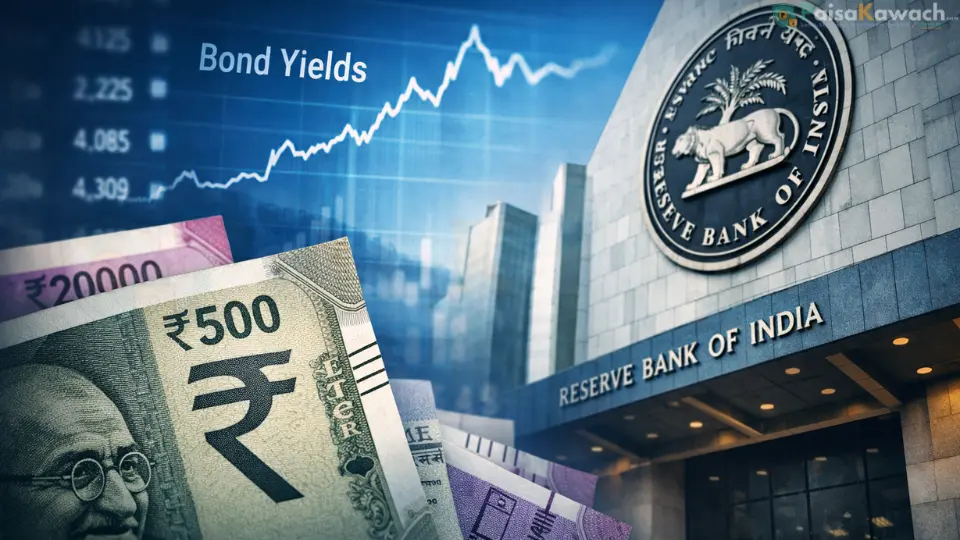
Global banks are facing renewed pressure as U.S. Treasury yields climb to levels not seen in nearly two decades. On September 25, 2026, the benchmark 10-year U.S. Treasury yield was trading around 5.19% after touching approximately 5.23%, while the 30-year Treasury yield recently climbed above 5.50%. Because U.S. government bonds are widely used as a benchmark for pricing money across the global financial system, a sharp rise in Treasury yields can quickly affect banks, companies, governments and consumers around the world.
The problem is not simply that U.S. interest rates are high. When Treasury yields rise rapidly, existing bonds lose market value, funding becomes more expensive and investors demand higher returns from almost every other financial asset. For banks, that can create pressure on their bond portfolios, deposit costs, lending margins and borrowers at the same time.
Why Are U.S. Treasury Yields Rising?
The current bond-market selloff is being driven by a combination of inflation concerns, higher energy prices, expectations for tighter monetary policy and worries about the long-term U.S. fiscal outlook. Higher oil prices have revived inflation fears, while investors increasingly expect interest rates to remain elevated for longer.
The 10-Year Treasury Has Become a Global Warning Signal
The U.S. 10-year Treasury is one of the most important interest-rate benchmarks in the world. Its yield influences mortgage rates, corporate borrowing, government debt, bank financing and the valuation of financial assets internationally. When investors demand a yield above 5% for relatively low-risk U.S. government debt, other borrowers generally have to offer even higher returns to attract capital.
- The U.S. 10-year Treasury yield reached roughly 5.23%, its highest level in about 19 years.
- The 30-year Treasury yield recently moved above 5.50%, reaching its highest level since 2004.
- Higher oil prices and inflation expectations are increasing expectations that global interest rates could remain high.
How Rising U.S. Bond Yields Hurt Banks
Banks are deeply connected to government bond markets because they hold large portfolios of government securities and use them for liquidity management, collateral and regulatory purposes. When bond yields rise, bond prices fall. That means older bonds paying lower interest rates become less valuable in the market.
Existing Bond Portfolios Can Lose Value
Consider a bank that previously purchased a 10-year government bond yielding 3%. If newly issued comparable bonds now offer more than 5%, investors have little reason to pay full price for the older 3% bond. Its market price must decline to become competitive. Banks holding large quantities of long-duration bonds can therefore accumulate significant unrealized losses when rates rise quickly.
- Bond prices generally move in the opposite direction to bond yields.
- Long-duration securities tend to experience larger price declines when interest rates rise.
- Losses may remain unrealized if securities are held to maturity, but they can become important if a bank needs to sell assets to raise cash.
Why Funding Is Becoming More Expensive for Banks
Higher Treasury yields also change what depositors and investors expect to earn on their money. If U.S. government securities can provide yields above 5%, customers may demand better returns on bank deposits or move money into money-market funds and government securities.
Banks May Have to Pay More to Keep Deposits
This competition increases banks' funding costs. A bank that previously paid very little interest on deposits may have to increase deposit rates to prevent customers from moving their money elsewhere. Higher funding costs can reduce net interest margins unless banks are able to raise lending rates by a similar amount.
- High Treasury yields make government securities more attractive relative to low-yield bank deposits.
- Banks may need to increase deposit rates to retain customers and liquidity.
- Higher funding costs can put pressure on bank profitability and lending conditions.
Borrowers Also Become Riskier for Banks
The impact does not stop at banks' balance sheets. Higher bond yields increase borrowing costs throughout the economy. Mortgage rates, business loans, corporate bonds and government financing can all become more expensive. Reuters reported that U.S. mortgage rates have reached around 7% as longer-term Treasury yields climbed.
Higher Interest Costs Can Increase Credit Risk
Companies and households carrying large amounts of debt may struggle when loans need to be refinanced at significantly higher interest rates. If economic growth slows while debt-servicing costs rise, banks could eventually experience an increase in loan delinquencies and credit losses.
- Businesses refinancing debt may face substantially higher interest expenses.
- Higher mortgage and consumer borrowing rates can reduce household spending and housing activity.
- A weaker economy can increase non-performing loans and credit provisions for banks.
Why Banks Outside the United States Are Also Affected
U.S. Treasuries effectively form the foundation of the global cost of capital. When their yields increase, investors often move money toward dollar-denominated assets because they can earn relatively high returns with comparatively low credit risk. That can pull capital away from Europe, Asia and emerging markets.
The Strong Dollar Creates Additional Pressure
Higher Treasury yields frequently support the U.S. dollar. A stronger dollar can make dollar-denominated debt more expensive for foreign companies, governments and banks to service. Emerging economies can be particularly vulnerable because they may experience capital outflows, currency depreciation and rising domestic borrowing costs simultaneously.
- Higher U.S. yields can attract global capital toward dollar assets.
- Capital outflows can weaken emerging-market currencies and increase local financial stress.
- Dollar-denominated loans and bonds become more expensive to service when local currencies depreciate.
Why European and Asian Banks Cannot Ignore the Bond Selloff
The rise in U.S. yields is occurring alongside higher government bond yields in several other major economies. Japan's 10-year government bond yield has moved above 3%, while Australian yields have also risen sharply. This means banks are dealing with a broader global repricing of interest-rate risk rather than an isolated U.S. event.
Global Central Banks Are Becoming More Hawkish
Persistent inflation and elevated energy prices are forcing central banks to reconsider how quickly interest rates can fall. The U.S. Federal Reserve has returned to rate hikes, while other central banks are also adopting more cautious or tighter policy positions. Higher policy rates can support banks' lending income, but rapid increases can simultaneously create bond losses, funding pressure and deterioration in borrower credit quality.
- Higher rates can initially improve income earned on newly issued loans.
- Rapid increases can reduce the value of securities already held by banks.
- Prolonged high rates can weaken borrowers and eventually increase credit losses.
Could This Become a Banking Crisis?
High Treasury yields alone do not automatically create a banking crisis. The condition of individual banks depends on their capital levels, liquidity, deposit structure, duration exposure and ability to manage interest-rate risk. However, a rapid rise in yields can expose vulnerabilities that were less visible when interest rates were low.
The Silicon Valley Bank Lesson Still Matters
The collapse of Silicon Valley Bank in 2023 demonstrated how rising interest rates can interact with large bond portfolios and unstable deposits. The bank accumulated substantial unrealized losses on securities as rates increased, while deposit withdrawals forced it to confront those losses. The circumstances at individual banks today vary widely, but the episode demonstrated why regulators closely monitor interest-rate and liquidity risks when bond yields rise sharply.
- Unrealized bond losses are most dangerous when institutions suddenly require liquidity.
- A stable and diversified deposit base can reduce the probability of forced asset sales.
- Capital, liquidity and interest-rate hedging are critical when bond markets become volatile.
Why 5% U.S. Treasury Yields Matter for the Entire Financial System
The global financial system spent much of the period following the 2008 financial crisis operating with unusually low interest rates. A sustained U.S. 10-year Treasury yield above 5% represents a very different financial environment. Investors can now obtain relatively high returns from government debt, forcing stocks, corporate bonds, real estate, private credit and other investments to compete with attractive risk-free yields.
The Global Cost of Capital Is Being Reset
The U.S. Treasury market is worth roughly $29 trillion and acts as a reference point for financial assets around the world. If yields remain above 5% or move materially higher, companies and governments may have to permanently adjust to more expensive financing. That adjustment could reduce investment, slow credit creation and pressure heavily indebted borrowers.
- Higher risk-free yields raise the minimum return investors demand from other assets.
- Corporate and government refinancing becomes more expensive across global markets.
- Banks may become more selective about lending as funding costs and credit risks rise.
What Should Markets Watch Next?
The direction of U.S. Treasury yields will depend heavily on inflation, oil prices, Federal Reserve policy and confidence in U.S. government finances. Markets are also closely watching whether the 10-year yield remains above 5% and whether investors begin seriously pricing the possibility of yields moving toward 5.5% or even 6%.
Four Indicators Could Determine the Next Phase
Investors should pay particular attention to U.S. inflation data, Federal Reserve guidance, Treasury yields and energy prices. A decline in inflation and oil prices could reduce pressure on bond yields. Persistent inflation or additional monetary tightening could keep financing conditions restrictive for banks and businesses worldwide.
- U.S. 10-year and 30-year Treasury yields will remain key measures of global borrowing conditions.
- Federal Reserve interest-rate decisions will influence bank funding and lending costs worldwide.
- Oil prices and inflation expectations could determine whether the global bond selloff continues.
Conclusion
U.S. Treasury yields are affecting banks around the world because American government debt sits at the center of the international financial system. With the 10-year Treasury yield around 5.2%, global borrowing costs are rising, existing bond portfolios are losing market value and banks are paying more to compete for deposits and wholesale funding.
The immediate issue is therefore not simply whether U.S. bonds fall further. The larger question is whether the global economy is entering a sustained period in which governments, banks, companies and households must operate with a much higher cost of capital. If Treasury yields remain elevated for an extended period, banks with strong liquidity and carefully managed interest-rate exposure may be better positioned, while highly leveraged borrowers and institutions with significant duration mismatches could face greater pressure.
Keep Reading: More Insights You Might Like

Comments
No comments yet. Be the first to comment!