Ninety-Dollar Oil, Continent-Hopping Disasters, and a Cricket Legend Defending Messi: The Week Three Different Crises Converged

Some weeks test one part of the global system. This week tested three at once, and none of them are finished testing yet. Oil is closing in on a price level that changes household budgets and central bank calculations everywhere. A storm in Chile, a heatwave gripping Europe, and a tropical storm colliding with a heatwave in Texas all landed in the same seven-day window, on three different continents. And a football controversy that should have faded the moment the trophy was lifted is instead gaining momentum days later, pulled along by voices as unlikely as an Indian cricket legend. None of these stories share a cause. But together they describe a world absorbing pressure from every direction simultaneously — economic, environmental, and cultural — with very little room left to treat any one of them as background noise.
Ninety-Dollar Oil and a Threat That Changes the Calculation
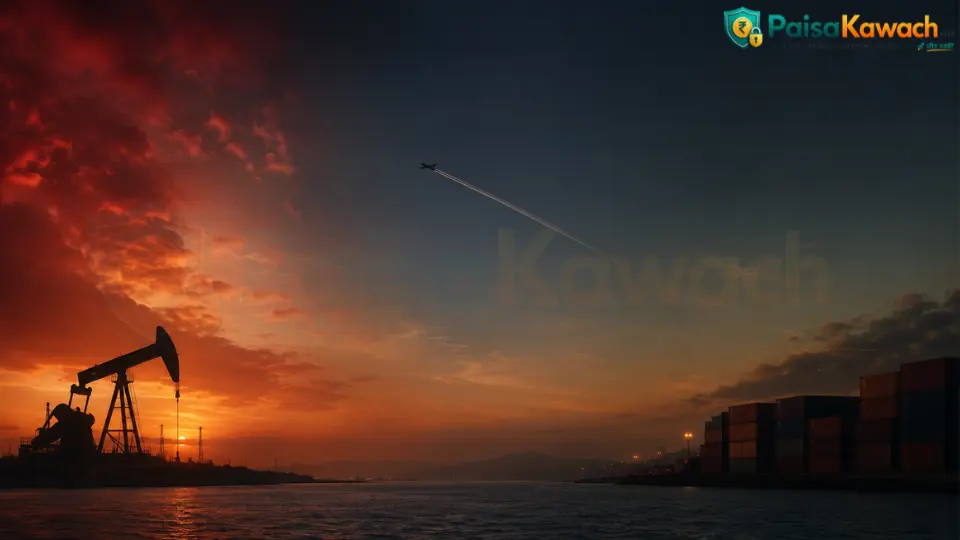
Brent crude has pushed to within striking distance of $90 a barrel, and the trigger this time wasn't a fresh military strike or a shipping incident — it was a threat. President Trump signaled he intends to make Iran "pay for the lives of Americans," a statement that reintroduced exactly the kind of open-ended escalation risk that markets have spent months trying to price around. Indian equity markets responded the way they have every time this pattern repeats: Sensex fell for a second consecutive session, dropping 238 points to close at 77,470, with investors turning cautious ahead of further earnings and global developments.
What's genuinely different about this particular oil move is where the pain is landing hardest. India's largest private banks — HDFC Bank and Axis Bank among them — are seeing their Net Interest Margins compressed as the broader rate environment shifts, and poor profitability prospects have driven direct selling pressure in banking shares, dragging down the Bank Nifty index specifically. This isn't a generic "oil is up, stocks are down" story. It's oil prices interacting with an already-fragile domestic banking sector, in the same week those banks are reporting earnings, creating a compounding effect rather than two separate problems sitting side by side.
Why $90 Oil Is a Different Number Than $80 Oil
Round numbers matter in commodity markets more than economic textbooks like to admit, because they function as psychological thresholds that shift positioning even before the underlying fundamentals justify it. For India specifically, elevated crude prices compound in three distinct ways simultaneously: they add directly to inflationary pressure, they widen the current account deficit by increasing the import bill, and they raise input costs across manufacturing and transport sectors that ultimately squeeze corporate profitability. When all three pressures build at the same time crude approaches a level like $90, the effect isn't additive — it's the kind of compounding pressure that shows up first in currency markets, then in bond yields, and only later in headline growth figures.
- A presidential threat, rather than an actual strike, was enough to push oil toward $90 — showing how sensitive this market has become to rhetoric alone after months of genuine escalation
- Indian private banks facing NIM compression from the broader rate environment are absorbing this oil-driven pressure at the exact moment their own earnings are under scrutiny
- The compounding effect of inflation, current account pressure, and rising input costs from elevated crude tends to surface in currency and bond markets well before it appears in headline growth data
Three Continents, Three Disasters, One Week
Step outside financial markets entirely and a second pattern is unfolding just as urgently. A severe storm tore through Chile, severing a key highway and flooding arid regions that are rarely built to handle this kind of water at all — a sign that infrastructure designed for one climate reality is increasingly facing a different one. Simultaneously, extreme heat is weighing heavily on Europe's economic prospects, a slower-moving but arguably more consequential story given how directly heat affects labor productivity, energy demand, and agricultural output across an entire continent. And in Texas, a heatwave is now colliding directly with Tropical Storm Bertha, forcing the state to manage two opposing weather extremes converging on the same population at once.
Layered on top of these three, a fire at Bordeaux Airport killed two firefighters and forced widespread flight cancellations — a reminder that infrastructure stress during periods of climate extremity doesn't only show up as flooding or heat, but sometimes in the mechanical failures and accidents that cluster around systems already operating under strain.
Why Simultaneous, Not Sequential, Disasters Matter More
A single major weather event, however severe, tends to draw a concentrated, well-resourced response — emergency services, insurance capacity, and media attention can focus almost entirely on one place. Three significant climate-linked disruptions landing on three different continents in the same week changes that calculus. Emergency response capacity, reinsurance capital, and international aid attention are all finite resources being asked to stretch across multiple simultaneous crises rather than one at a time. This is a genuinely different operating environment than a single disaster narrative, and it's one insurers, agricultural planners, and energy grid operators are having to model with far less historical precedent than they'd like.
- Chile's storm damage to infrastructure not built for this scale of flooding reflects a broader mismatch between existing infrastructure and shifting climate patterns
- Extreme heat's drag on Europe's economic prospects operates on a slower timeline than a single storm, but carries broader consequences for labor productivity and energy demand across an entire continent
- Simultaneous disasters across multiple continents stretch finite global emergency-response and reinsurance capacity further than sequential single events would, a genuinely different risk environment for insurers and planners
The World Cup Controversy That Refuses to End
The third story is the lightest in stakes but genuinely revealing in what it says about how modern controversies actually behave. Days after Spain's extra-time win over Argentina in the record 48-nation World Cup final, the story hasn't faded — it's gained new voices. Cricket legend Sourav Ganguly publicly came to Lionel Messi's defense following criticism the Argentine star faced after the final, an intervention notable precisely because it comes from outside football entirely, from one of cricket's most recognizable global figures.
This matters beyond pure sports commentary because it illustrates something about how controversies spread in the current media environment: they no longer stay contained within their original context. A football final controversy pulling in commentary from a cricket icon on a different continent shows how quickly modern sports narratives cross sport, geography, and audience lines, sustaining attention and conversation well past the point a traditional news cycle would have let the story rest.
- A cricket legend defending a football star shows how sports controversies increasingly cross sport and geographic boundaries rather than staying contained to their original audience
- The controversy gaining new voices days after the final, rather than fading, reflects how modern sports narratives can sustain momentum well beyond a traditional news cycle's usual lifespan
- This continued attention keeps the tournament relevant in global cultural conversation and commercial commentary even as the actual competition has long concluded
What Ties These Three Together
An oil threat pushing crude toward $90, three separate climate disasters unfolding across three continents simultaneously, and a football controversy that keeps finding new life days after the final whistle have nothing in common on the surface. But each one demonstrates the same underlying dynamic: systems that used to absorb single shocks one at a time — energy markets, emergency infrastructure, and even public attention itself — are now being asked to handle multiple, simultaneous pressures with less slack than they've had in recent memory. Whether that system is a national grid, a reinsurance pool, or simply the collective attention span of a global audience, the lesson from this particular week is the same: the margin for absorbing the next shock, whatever it turns out to be, keeps getting thinner.
Keep Reading: More Insights You Might Like
 Chips Rebound, Banks Wobble, and a Sponsor Says the Quiet Part Out Loud: Three Signals From a Contradictory Monday
Next →
Chips Rebound, Banks Wobble, and a Sponsor Says the Quiet Part Out Loud: Three Signals From a Contradictory Monday
Next →
 The Referendum, the Eleventh Day, and the Twenty-Four Hours: How Three Unrelated Decisions Are Testing the World at Once
Comments
No comments yet. Be the first to comment!